Finding God in the Dark
Joe Henry is adventurous in words and music. A review of Blood From Stars.
 News
NewsJoe Henry is adventurous in words and music. A review of Blood From Stars.
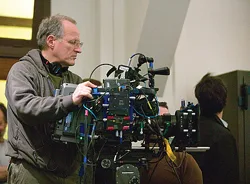
Public Enemies director Michael Mann often blurs the line between the good guys and the bad in the moral crossfire between cops and robbers.
What's so great (and what's not) about the band's new album.
Why "John 3:16" being the top Google search isn't something to celebrate.
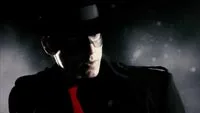
Will Eisner and Frank Miller: two great tastes that taste awful together? A couple of decades ago, maybe. In the late 1980s, when comic-book giant
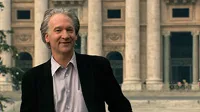
Let’s face it: most documentaries these days don’t bother to document anything in an objective, journalistic sense. We can thank Michael Moore for re-conceiving the documentary film as something akin to a sensationalistic, cinematic op-ed piece. If you have something you hate, or something you want to humiliate in as public a way as possible, Read more...
Two years ago, there was a big controversy when Facing the Giants, an ultra-low-budget movie produced by a church in the Bible Belt, was rated PG, allegedly for its spiritual content. Pundits and politicians railed against the MPAA and its ratings board for its perceived bias against religious themes, and moviegoers rallied to the film’s Read more...
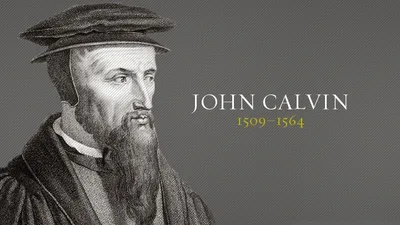
And so this mere taste of true godliness that I received set me on fire with such a desire to progress that I pursued the rest of my studies more coolly, although I did not give them up altogether.” He became marked out as a “Lutheran,” and, when persecution arose in Paris (where he had returned to teach), he sought refuge in Basel. The Institutes of the Christian Religion was intended as an elementary manual for those who wanted to know something about the evangelical faith—”the whole sum of godliness and whatever it is necessary to know about saving doctrine.” Calvin later wrote, “I labored at the task especially for our own Frenchmen, for I saw that many were hungering and thirsting after Christ and yet that only a very few had any real knowledge of him.” In The Institutes, Calvin outlined his views on the church, the sacraments, justification, Christian liberty, and political government. Calvin taught that once a believer understands he is chosen by Christ to eternal life, he will never have to suffer doubt again about salvation: “He will obtain an unwavering hope of final perseverance (as it is called), if he reckons himself a member of him who is beyond hazard of falling away.” God’s city After fleeing France to escape persecution, Calvin settled in Geneva at Farel’s bidding.
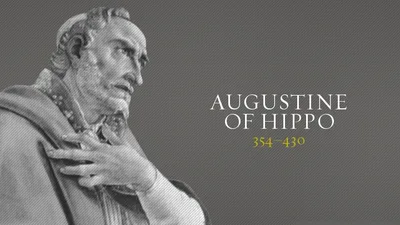
Suddenly he heard a child’s sing-song voice repeating, “Take up and read.” On a table lay a collection of Paul’s epistles he’d been reading; he picked it up and read the first thing he saw: “Not in reveling and drunkenness, not in lust and wantonness, not in quarrels and rivalries. He later wrote, “No further would I read; nor needed I: for instantly at the end of this sentence, by a light as it were of serenity infused into my heart, all the darkness of doubt vanished away.” From monk to bishop Augustine’s conversion sent shockwaves through his life. He wrote scathingly, “The clouds roll with thunder, that the house of the Lord shall be built throughout the earth; and these frogs sit in their marsh and croak ‘We are the only Christians!’ “ In 411 the controversy came to a head as the imperial commissioner convened a debate in Carthage to decide the dispute once and for all.