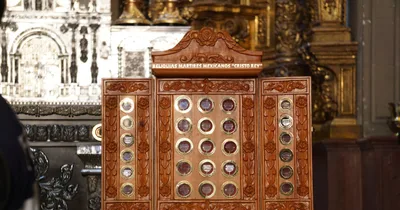
Mexico’s bishops call for honoring Cristero War martyrs by building peace
“The best tribute to our martyrs will be to ensure that their testimony bears fruit today in the form of reconciliation, peace, and charity,” the bishops of Mexico said in a pastoral letter to mark the centenary of the beginning of the Cristero resistance. Their Faith, Our Memory; Their Witness, Our Mission,” the Mexican Bishops’ Conference (CEM, by its Spanish acronym) reflected on the Cristero War, an armed resistance to draconian anticlerical laws that took place from 1926 to 1929. José “Joselito” Sánchez del Río, who was executed at the age of 14 and canonized by Pope Francis in 2016; and Blessed Miguel Agustín Pro, a Jesuit priest who was executed by firing squad in 1927.In its pastoral letter, the Mexican Bishops’ Conference stated that the conflict resulted in approximately 250,000 deaths, “including combatants from both sides and the civilian population.”“The wounds caused by violence, unjust poverty, corruption, forced disappearances, the fragility of family life, and so many forms of exclusion challenge the Church to work for justice, truth, human dignity, and peace,” the CEM noted.The bishops wrote that “a Church that preserves the memory of its martyrs is called to be a reconciling Church,” a responsibility that is especially urgent in a Mexico marked by “violence, insecurity, distrust, and the weakening of community bonds.”The bishops emphasized that though the religious persecution was real, the Cristero War ended up “pitting Mexicans against Mexicans,” and, therefore, they said it is necessary to study the historical period without reducing it “to a story of the good guys versus the bad guys.”“We do not celebrate the armed conflict that arose from this conflict over religion, nor do we seek revenge,” they stated, noting that the memory of the martyrs should serve as “a historical inspiration for building bridges of dialogue and national reconciliation.”A remembrance that translates into ‘a renewed commitment’The bishops insisted that “this centenary cannot be merely a nostalgic commemoration; rather, it must prompt us to examine our consciences and become, for us, a renewed commitment.”Therefore, they proposed ethical, community, and ecclesial commitments, including the defense of freedom of religion and conscience, the rejection of armed violence, and the strengthening of support, education, and solidarity networks, “especially with the poorest.”The prelates also called for promoting the civic participation of Catholics, recognizing the role of women and young people in building peace, and fostering historical education to prevent the ideological manipulation of the past.“Today, we are called to follow a peaceful path, one that is no less courageous for being so,” they noted, encouraging everyone to “defend, with clarity and determination, religious freedom including its expression, its public practice, and the conscientious choices it demands as well as life, human dignity, and peace.”The bishops invited families, young people, priests, consecrated persons, and the lay faithful to “heal our memory, strengthen our communion, and renew our commitment to evangelization.”“We do not advocate for a memory confined to the past, but rather one that is alive, one that illuminates the present and opens paths toward a new future,” they stated.This story was first published by EWTN News Español, the Spanish-language sister service of EWTN News.